
Europass CV: when to use it and how to fill it in
By Bhagirath Sheela, founder of JobCatch ·
Europass is the European Union's standard CV format, with a free online editor on the EU's Europass portal. It is recognised across Europe, which makes it a safe choice when you do not know a country's own conventions — but it is not what every European employer prefers.
When Europass is the right choice
- Applications to EU institutions and agencies, and many public-sector employers.
- Academic and exchange applications: master's programmes, Erasmus, research posts.
- Countries where it is widely used, such as Italy, Spain, Portugal and much of central and eastern Europe.
- When a posting asks for it by name.
Private employers in Germany, the Netherlands, the Nordic countries and Ireland often prefer a shorter national-style CV. For Germany, see the Lebenslauf guide.
What goes in it
- Personal information: name, contact details, and optionally nationality, date of birth and a photo.
- Work experience and education and training, newest first, with dates and places.
- Language skills, self-assessed on the Common European Framework (CEFR) scale.
- Digital skills, and other sections such as projects, publications or volunteering, as they apply.
Language levels: A1 to C2
Europass asks you to rate each language for listening, reading, speaking and writing on the CEFR scale: A1 and A2 (basic), B1 and B2 (independent), C1 and C2 (proficient). Be honest — an interview in that language will test it. If you hold a certificate (IELTS, Goethe-Zertifikat, DELF), name it with its level.
Your mother tongue is listed separately. For most Indian applicants that is one Indian language, with English and others rated on the scale.
Keep it short
The most common complaint about Europass CVs is length: every section filled, for every job, with generic text. Two or three pages is plenty. Leave empty sections out, write results rather than duties, and tailor the profile to each application.
Questions
Is Europass mandatory for jobs in Europe?
No. It is accepted everywhere in the EU, but most private employers accept any clear CV, and some prefer their national style. Use Europass when asked, or when you are unsure of local conventions.
Should a Europass CV have a photo?
It is optional. A photo is common in some countries, such as Germany, Italy and Spain, and unusual in others, such as the Netherlands, Ireland and the UK.
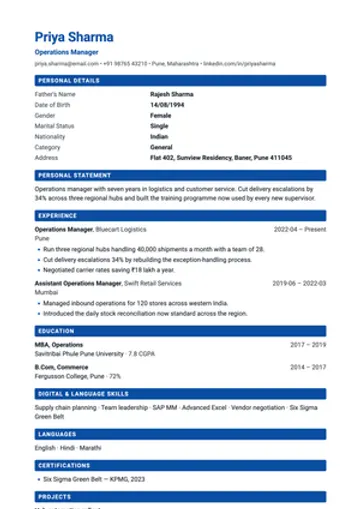
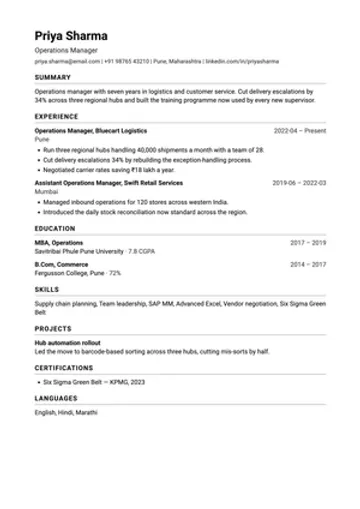
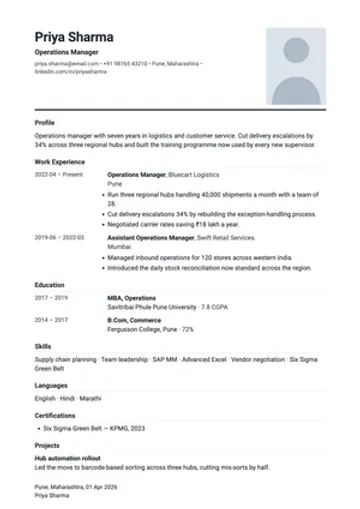
Templates that follow this format
More guides: ATS-friendly resume · Fresher resume format · Bio-data format · Spot a fake job offer · Gulf CV · German CV · UK CV · US and Canada resume · Government job resume · Teacher resume · Campus placement resume · ATS myths · Naukri resume headline · Notice period · CTC on a resume · Employment gap